
"coffee statistics"
2000 article(s) found

Vietnam's coffee exports continue to increase
According to Japanese media reports, Vietnam ranks first in the world in the production of Robasta coffee beans used to make instant coffee, and exports are increasing. On the other hand, there are also problems such as difficulties in delivering goods to farmers and problems in purchasing coffee beans from foreign countries and processing orders for export companies. Local economic newspapers such as Vietnam Investment Review reported the incident. According to statistics from Vietnam's Ministry of Agriculture and Local Development, Lobar

An important era in the history of American coffee
Coffee training Culture: an important era in American Coffee History.

Vietnam: surpassing Brazil to become the world's largest coffee exporter
According to Taiwan's Central News Agency, according to the International Coffee Organization (ICO), Vietnam exported 14.32 million 5000 bags of raw coffee beans (60 kilograms per bag) in the first six months of this year, 13.63 percent higher than that of Brazil, making it the world's largest coffee exporter. Statistics from Vietnam's General Administration of Customs show that in the first half of this year, the country's coffee exports reached 1.04 million tons, with an export value of 2.12 billion US dollars.

Current situation of coffee industry in Ecuador _ recommended by Ecuadorian coffee brands _ what kind of coffee is good in Ecuador
Professional coffee knowledge exchange more coffee bean information Please follow the coffee workshop (Wechat official account cafe_style) Ecuadorian coffee bean planting area of 305.000 hectares, of which Arabigo coffee accounts for 68% and Robusta coffee accounts for 32%. Coffee, cocoa and banana are the three traditional crops of Ecuador, which are not only the source of farmers' income, but also the source of income for farmers.

The ranking of coffee consumption in various countries provides an astonishing figure.
People who like coffee very much, have you ever calculated how many cups of coffee you drink every year? No one should do such relevant statistics! You can't imagine how much you like coffee in various countries. Now let's surprise you with an amazing figure. The cumulative amount of coffee per person per year ranks the country's consumption (cups)

What kind of flavor does 2017COE champion variety Palayinema Parainema have?
Professional coffee knowledge exchange more coffee bean information please follow coffee workshop (Wechat official account cafe_style) Honduras Benigno Mejia small farmer Parainema has been growing coffee in Honduras for more than 200 years (since 1804) statistics now planting area of 280000 hectares, mainly small coffee farmers, 92% of Honduran coffee farmers belong to

Coffee exports from Honduras grew by 55% in the first nine months of the year.
According to preliminary statistics of the industry, in the first nine months of this harvest, the total value of coffee exports from Honduras reached 1,099.9 million US dollars, an increase of 55 percent compared with 79.7 million US dollars in the same period last year. According to a preliminary report released by the Honduran Coffee Association (Ihcafe), from October last year to June this year (the first nine months of the 2016-2017 harvest year), Hongguo exported a total of coffee.

Coffee dregs made into light coffee-flavored glasses, both fashionable and environmentally friendly!
Professional coffee knowledge exchange more information about coffee beans Please follow the coffee workshop (Wechat official account cafe_style) the lenses made of coffee grounds are strong, flexible and 100% biodegradable when discarded. I drink less than 2.5 million cups of coffee a day. According to this statistics, we produce 34 million kilograms of coffee grounds as waste every day. Now, coffee grounds can be used as fertilizer or compost.

International Coffee Organization reports that tea and coffee consumption in Arab countries has more than tripled
According to the latest statistics released by the International Coffee Organization, tea and coffee consumption in Arab countries has more than tripled in the past decade. Consumption in the United Arab Emirates has increased by 85% in the past three years. The per capita annual consumption of tea and coffee in the United Arab Emirates is 3.5 kg, which is about double that of other Gulf countries, and tea consumption has increased by 47%. 2011 Global Coffee
Egyptian cafes smoke hookah
Illustrious background: if you want to know Egypt, you have to go to a cafe. Modern statistics show that there is about one coffee shop for every 250 people in Cairo. For the people of Cairo, the cafe is not only the center of public opinion like some Western clubs, but also the meeting place of three religions and nine streams. The Fesavi Cafe is the oldest and most famous cafe in Cairo. It is located in the famous old city of Cairo.

Vietnam's coffee exports are on the rise.
According to Japanese media reports, the production of Robasta coffee beans used to make instant coffee in Vietnam ranks first in the world, and the export volume is increasing. On the other hand, it also gives rise to problems such as farmers' difficulties in shipping, export companies purchasing foreign-made coffee beans, handling orders and so on. The Vietnam Investment Review, a local economic newspaper, reported the incident. According to statistics from Vietnam's Ministry of Agricultural Local Development, Drogba

Blue Mountain Coffee Export quota with limited basic knowledge of Coffee
According to Jamaica's CIB export statistics as of 2004, 85 per cent of the limited Blue Mountain 1 quota was allocated to Japan, 5 per cent of the United States, 5 per cent of Europe and 5 per cent of other countries. However, in the global consumption distribution of authentic Blue Mountain No. 1, according to the International Coffee Association (ICO), China accounts for 15% of the consumption of Blue Mountain coffee, which stunns the world. The reason is that part of Japan, Australia and Europe

South Korea imported nearly 100000 tons of coffee in the first three quarters.
South Korea's coffee imports rose 18.7 percent year-on-year to 99372 tons from January to September this year, surpassing the largest imports since 1990 (92040 tons), according to statistics released by the South Korean Customs Agency on the 21st. According to this trend, South Korea's coffee imports this year are expected to reach an all-time high. In the same period, coffee imports surged 21.1% from the same period last year.
Vietnam's coffee exports continue to increase
According to Japanese media reports, Vietnam ranks first in the world in the production of Robasta coffee beans used to make instant coffee, and exports are increasing. On the other hand, there are also problems such as difficulties in delivering goods to farmers and problems in purchasing coffee beans from foreign countries and processing orders for export companies. Local economic newspapers such as Vietnam Investment Review reported the incident. According to statistics from Vietnam's Ministry of Agriculture and Local Development, Lobar

Koreans prefer coffee to kimchi because it tastes like pot soup.
Chinanews.com, Feb. 2-according to foreign media reports, pedestrians holding a cup of coffee are often seen on the streets of Seoul. According to statistics, each person in South Korea drinks an average of two cups of coffee a day, and Koreans drink coffee more often than they eat kimchi. According to a recent report released by South Korea's Ministry of Agriculture, Forestry and Animal products and the Agricultural and Aquatic Food Circulation Commune, the single type of food that Koreans consume most frequently every week is

The coffee producing area of Bolivia, the coffee characteristics of Bolivia
Following Cafe (Wechat official account vdailycom) found that Beautiful Cafe opened a small shop of its own Bolivia (South America) established diplomatic relations with China on July 9, 1985. In 2014, high-level exchanges between the two countries have been maintained and mutual political trust has been continuously deepened. The economic and trade cooperation between the two countries is developing rapidly, and the areas of cooperation are constantly expanding. According to Bolivian statistics, China has become the largest in Bolivia in 2014.
Coffee Health US study finds that drinking coffee helps prevent skin cancer
Topical or oral use of caffeine has a preventive effect on skin cancer caused by excessive sun exposure, according to a US study. A study by the university of Washington in Seattle found that drinking one cup of caffeinated coffee a day reduced the risk of skin cancer by 5%, while decaffeinated coffee had no effect. Although caffeine helps prevent skin cancer, sun protection still needs to be done. Statistics show that
The dark side of coffee that you don't know.
Seemingly humble coffee beans are actually one of the most actively traded commodities in the world. Just look at the coffee consumption statistics in the United States. According to a 2015 Gallup poll, 64% of Americans drink at least one cup of coffee a day, an average of 2.7 cups a day. The United States imports about 127000 tons of raw coffee beans every year, and the annual per capita consumption of coffee in the United States exceeds 4 kilograms. For most
Shade planting Coffee: Shade Grown
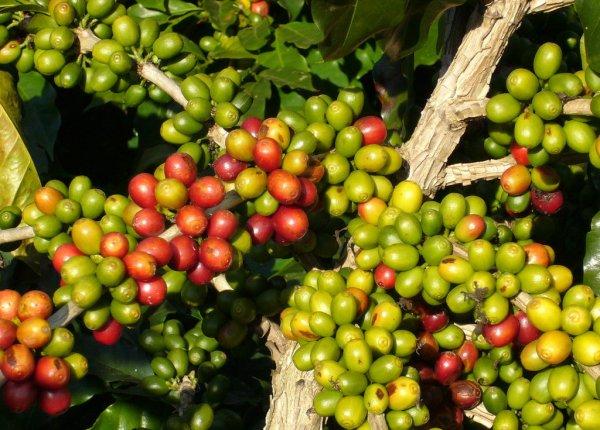
If you pay close attention to it, some raw bean sacks will be marked with the word Shade Grown, and most of them will be shaded and planted in Chinese. The so-called shade planting refers to the most praised Arabica species among the coffee varieties. The output of this variety accounts for 60% to 70% of the statistics of global coffee production, and is considered to be a coffee with excellent flavor that can be tasted carefully. Relative to Robes.
How many cafes are there in China? What is the living condition (4)
It is the young women who save the cafe. ▲ Cafe consumers' age and gender ratio conclusion 1) only women can save the cafe. In the user profile statistics, the coffee shop accounts for 70% of the female consumers; 2) Young people are the main force, contributing 75% of the consumption of people aged 20 to 35, and 75.3% of the coffee consumption. In 2016, the post-80s and post-90s generation exceeded 400 million people.